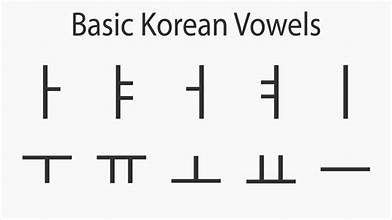
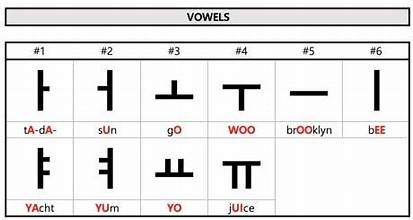
Korean vowels are the breath of Hangeul. Without them, consonants cannot make a full sound. Once you master these 10 basic vowels, you’ll be able to read and pronounce most Korean words. Let’s meet them one by one!
Vertical Vowels (stand tall like people)
1. ㅏ (a)
- Sound: like “a” in father.
- Example: 사 (sa) = four.
- Tip: Open your mouth wide and say ahhh.
2. ㅑ (ya)
- Sound: like “ya” in yacht.
- Example: 야 (ya) = hey!
- Tip: It’s just ㅏ with a “y” sound in front.
3. ㅓ (eo)
- Sound: unique to Korean, somewhere between uh and aw.
- Example: 어 (eo) = uh / what?
- Tip: Relax your mouth, don’t round your lips.
4. ㅕ (yeo)
- Sound: like “yaw” but softer.
- Example: 여 (yeo) = woman.
- Tip: Add a “y” sound before ㅓ.
Horizontal Vowels (spread wide like the earth)
5. ㅗ (o)
- Sound: like “o” in go (but shorter).
- Example: 오 (o) = five.
- Tip: Round your lips slightly.
6. ㅛ (yo)
- Sound: like “yo” in yoga.
- Example: 요 (yo) = polite ending, “please.”
- Tip: Just add “y” to ㅗ.
7. ㅜ (u)
- Sound: like “oo” in food.
- Example: 수 (su) = number.
- Tip: Round your lips strongly, like blowing through a straw.
8. ㅠ (yu)
- Sound: like “you” in youth.
- Example: 유 (yu) = milk (우유, uyu).
- Tip: Add a “y” sound to ㅜ.
9. ㅡ (eu)
- Sound: unique Korean sound, like uh but with lips pulled wide.
- Example: 그 (geu) = that.
- Tip: Don’t round your lips — keep them flat like a line.
10. ㅣ (i)
- Sound: like “ee” in see.
- Example: 이 (i) = tooth / this.
- Tip: Just smile and say “ee.”
Quick Summary Table
| Vowel | Romanization | English Similar | Example Word | Meaning |
|---|---|---|---|---|
| ㅏ | a | a in father | 사 (sa) | four |
| ㅑ | ya | ya in yacht | 야 (ya) | hey |
| ㅓ | eo | uh/aw (unique) | 어 (eo) | what? |
| ㅕ | yeo | yaw (soft) | 여 (yeo) | woman |
| ㅗ | o | o in go | 오 (o) | five |
| ㅛ | yo | yo in yoga | 요 (yo) | please |
| ㅜ | u | oo in food | 수 (su) | number |
| ㅠ | yu | you in youth | 유 (yu) | milk (우유) |
| ㅡ | eu | unique “eu” | 그 (geu) | that |
| ㅣ | i | ee in see | 이 (i) | tooth / this |
Tips to Remember
- Adding a short vertical stroke (ㅣ) in front makes a “y” sound:
- ㅏ → ㅑ, ㅓ → ㅕ, ㅗ → ㅛ, ㅜ → ㅠ
- Try saying them in pairs: ㅏ–ㅑ, ㅓ–ㅕ, ㅗ–ㅛ, ㅜ–ㅠ.
- Practice with real words!
Final Thought
These 10 vowels are the foundation of Korean. With just these, you can already read many words and phrases. Once you feel comfortable with them, you’ll be ready to explore double vowels like ㅐ, ㅔ, ㅚ, and more.
Remember: vowels are the breath of Hangeul — they bring consonants to life and let your Korean words flow.
 Laura's Korean Story
Leave a comment